
'Why don't I organise an auction of cinematic memorabilia?' recalls Dinesh Raheja. 'There are sure to be legions of film buffs who will cherish the chance to own souvenirs intimately associated with their favourite stars onscreen.'

'I make films which I think have the possibility of being liked by a majority of people, and you present it with the right emotions.'

'I played five different versions of Woh Subah Kabhie Toh Aayegi for Raj Kapoor, only to be greeted with a totally blank reaction.' 'Thereafter, for 40 minutes, he disappeared, leaving us baffled.' 'But when he emerged, he couldn't stop appreciating our efforts!' 'He said Sahir Ludhianvi's writing was sheer poetry and since all my five tunes were equally wonderful, he would leave it to my discretion to chose the final tune.' 'What could be greater appreciation for an artiste?'

As the digital age turns children into informed, opinionated little adults, what guardrails should parents employ? Parents with new-age sensibilities admit to oftentimes feeling stumped. A psychologist, a principal and an eye doctor suggest how they can navigate this new parental landscape.

'Bappi Lahiri was looking for a break so he and his father would meet me.' 'I told Director Bhisham Kohli about this promising young boy from Kolkata, and Bappi came over with his harmonium.' 'Bappi played this composition and Bhisham liked it immediately.' 'As we were discussing, I said I would give the words, and that's how I wrote this song.'

Because of Mukesh's much-hailed association with Raj Kapoor, it is often overlooked that the singer has also scored hits with almost all major heroes. On Mukesh's 102nd birth anniversary on July 22, Dinesh Raheja recalls some of his classic songs.
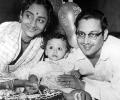
'Abrar uncle said he had started drinking from the afternoon on that fateful day. And he continued drinking till late at night.' 'Thereafter, he must have consumed some sleeping pills, as was his habit.' 'I think that combination went fatally wrong.'

'You have become a big star. How can you play a secondary role to Meena Kumari?'

'I always considered him as a director, never an actor. Do you know he always considered other actors for his films first?' 'For Pyaasa, he wanted to cast Dilip saab; only when Dilip saab refused did Guru Duttji decide to do the role himself.'

'Everyone at Guru Dutt Productions would get monthly salaries. Waheeda didi would get Rs 2,500 per month. And that was the reason why she left.'

'The industry has never accepted me.' 'When I was shooting Aashiqui, I would hear comments like, "Yeh toh bahut lambi hai. Heroine nahin dikhti hai".' 'Aashiqui became such a big hit, and you know how the industry is.' 'You have success, then you have everything.'

Kareena has been a leading lady now for 25 years, Deepika for almost two decades and Alia for over a decade. Dinesh Raheja chronicles the changing ways Bollywood has treated actor-moms.
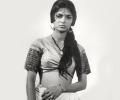
'Dharmendra was paying a little extra attention to me and she didn't like it.'

'Those were not kind days for a woman with a break-up. The world has changed; today, nobody cares.'

'I am smitten with Tokyo's eclectic mix of modern cosmopolitanism and old world Japan,' confesses Dinesh Raheja.

'I saw Bimal Roy's Devdas again a few years ago, almost 50 years after it had been made.' 'I found it very intelligently made; the scenes flowed so beautifully.' 'There is just one scene with both Suchitra Sen and me in the film, and it's beautiful.'

'Even today, though my hair looks different, people recognise me wherever I go. They come up and say 'Aap Maine Pyar Kiya mein thi, na?' I think it's going to follow me to the grave.'

Today's Hindi film mothers are younger, trendier, more mischievous. But, truth be told, says Dinesh Raheja, I still do miss sometimes the comforting presence of the trad mother.
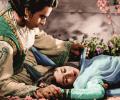
'K Asifsaab was very definite that 'woh Hindustan ka honewala Badshah hai -- woh gana nahin gayega.'

'Alaya has kept her career disconnected from me in every way.' 'She wanted to achieve success by herself without any help or interference.'
